
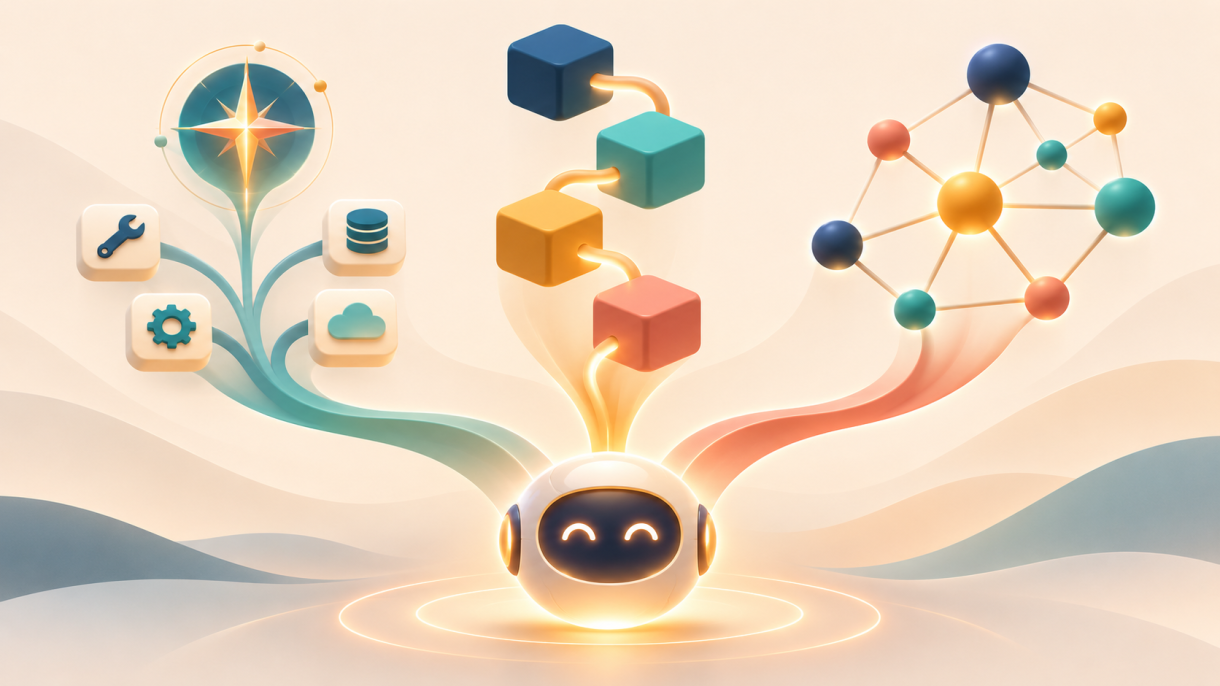

Hermes Agent, LangChain and LangGraph are often compared as if they were competing agent frameworks. That comparison misses the main distinction: Hermes is an installable agent runtime, LangChain is a framework for building application-level agents, and LangGraph is a framework for orchestrating stateful workflows.
The practical question is not which one is universally better. It is where you want to start: with an existing agent you configure, with components for a custom agent, or with explicit control over a workflow’s state and transitions.
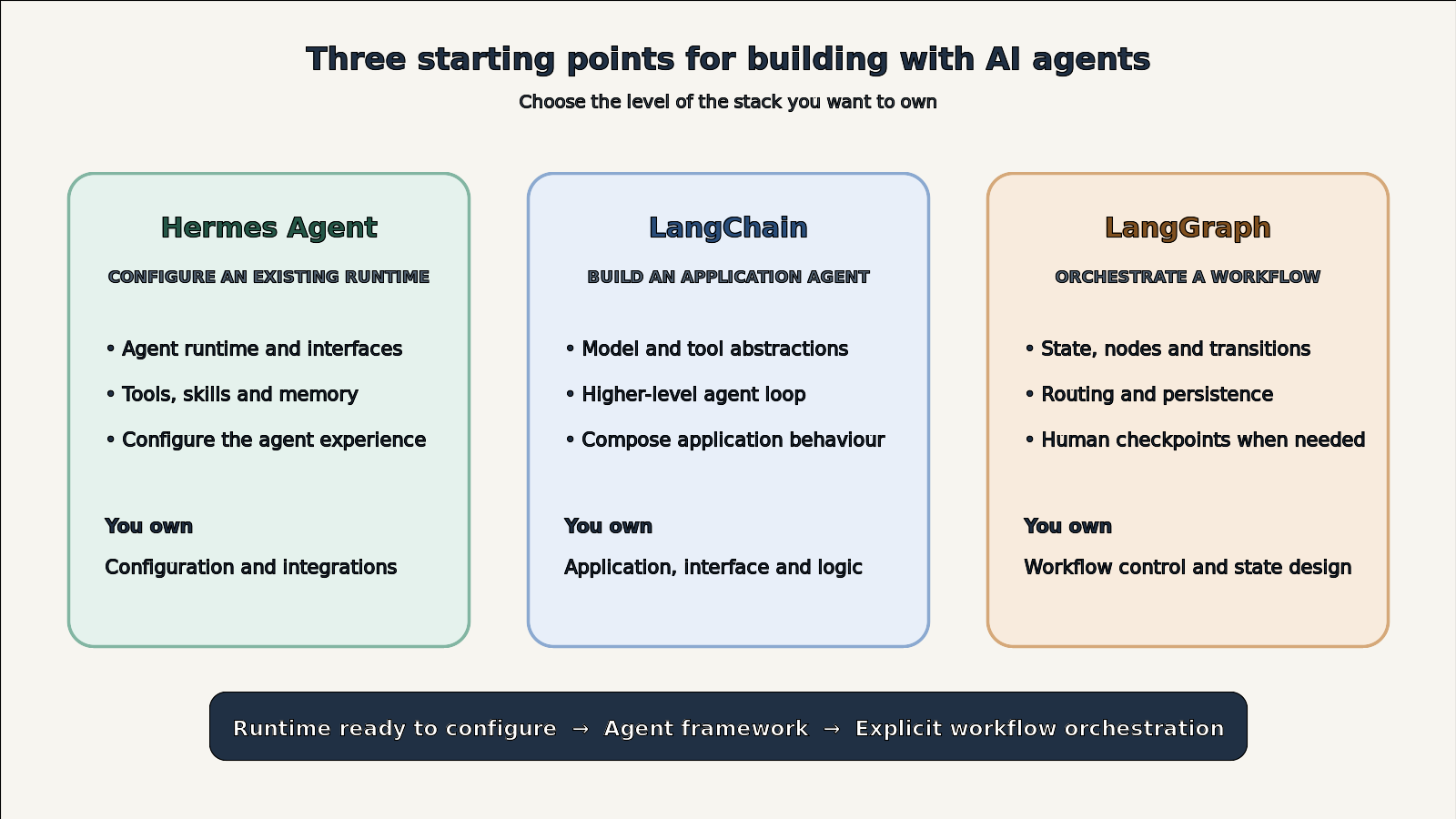
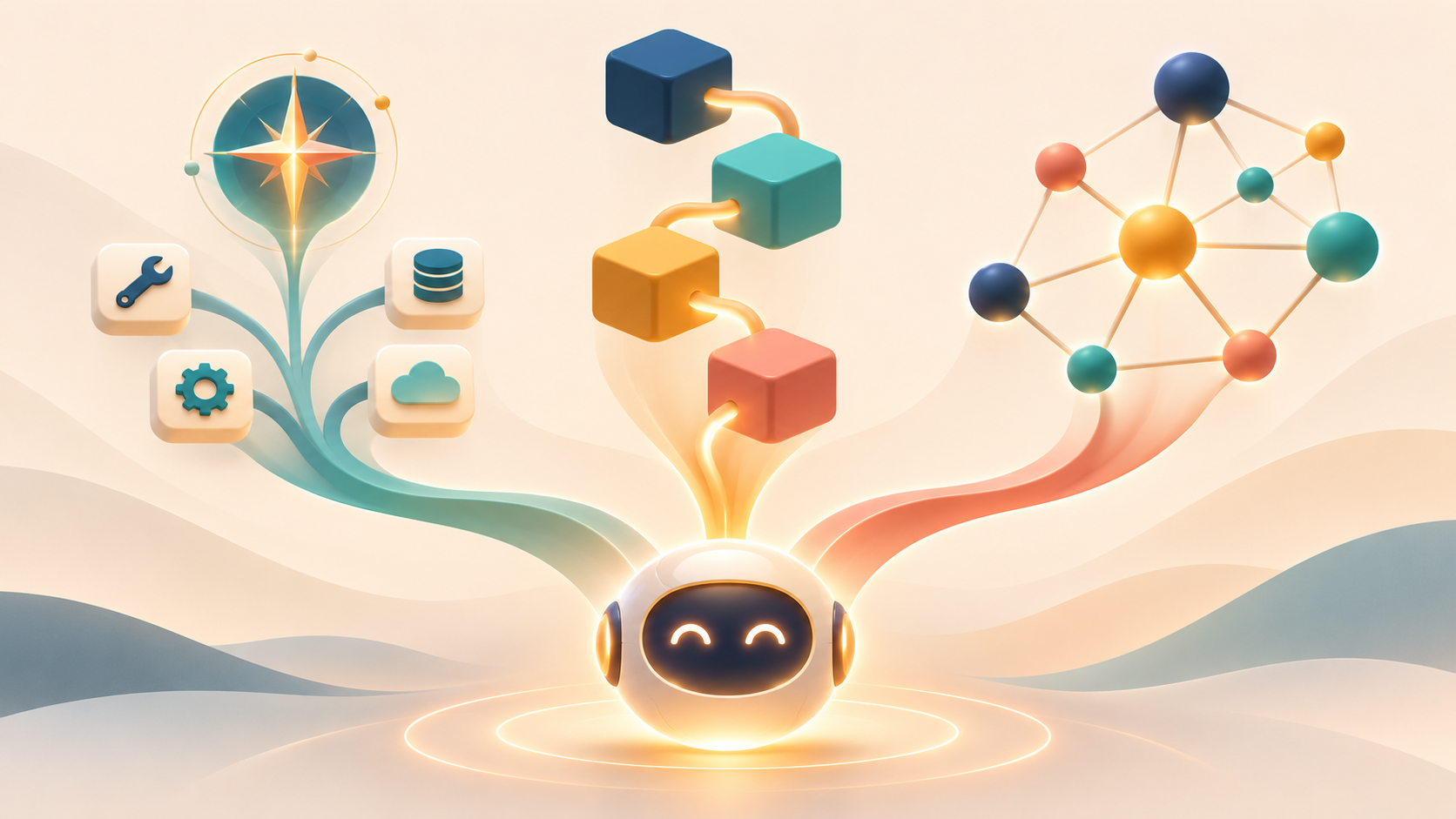
Three different starting points
| Tool | What you start with | What you design |
| Hermes Agent | An installable agent runtime, CLI and messaging gateway | Configuration, tools, skills, memory and integrations for an existing agent experience |
| LangChain | Higher-level building blocks and an agent loop | A custom application agent using model and tool abstractions |
| LangGraph | State, nodes and transitions for orchestration | A workflow’s control flow, persistence and points for human input |
Hermes Agent: configure an existing runtime
Hermes is intended to be installed and used as an agent. It brings an existing runtime and interfaces, with configuration for model providers, tools, skills, memory and MCP integrations. You shape how the agent works without having to build the whole application shell first.
This is a good fit when the provided agent experience is close to what you need. If your product requires a different user interface or tightly tailored application behaviour, you may need to build around it or choose a development framework instead.
LangChain: build an application agent
LangChain is a higher-level framework for developers building custom applications with language models. Its abstractions help connect models and tools and provide an agent loop, so you can focus on the application’s behaviour and integration points.
Choose this approach when you want to own the application and a higher-level agent abstraction is sufficient. The application’s interface, deployment and product-specific logic remain your responsibility.
LangGraph: model the workflow explicitly
LangGraph is a lower-level orchestration framework and runtime. You represent work as state and connect nodes with transitions. That makes the workflow’s routing and pauses explicit, and supports capabilities such as persistence, durable execution and human review.
LangChain’s agents are built on LangGraph, but the tools serve different levels of abstraction. LangGraph can also be used directly, without adopting LangChain’s higher-level agent framework.
The same request, different ownership
Imagine a request that requires looking up information, deciding whether it is complete, and asking a person to review an uncertain result. With Hermes, you configure an existing agent to work through its available tools and interfaces. With LangChain, you build an application agent and compose its model and tool interactions. With LangGraph, you define the workflow itself: what state is carried forward, which step runs next, and where the process waits for a person.
These approaches can overlap in a real system, but they are not equivalent packages in a feature checklist. The amount of application and orchestration design you take on is different.
Which should you choose?
- Start with Hermes Agent when you want to install and configure an agent that already has a runtime and interfaces.
- Start with LangChain when you are building a custom application and want higher-level components for its agent behaviour.
- Start with LangGraph when state, routing, persistence or human checkpoints need to be explicit parts of the workflow.
A useful first step is to sketch the request, the tools it needs, the information that must persist between steps, and the decisions that require a person. That sketch often makes the appropriate level of abstraction clearer than comparing feature lists.
