


Mehdi Fekih

Two Memories, One Source of Truth: Designing a Reliable Memory Layer for AI Agents
A practical architecture for combining a human-readable Markdown knowledge base with semantic conversational memory, while keeping one authoritative source of truth.

Quand le monitoring semble cassé : une méthode forensique pour diagnostiquer sans aggraver
Un dashboard vide ne prouve pas qu’un service est indisponible. Voici une méthode progressive pour distinguer panne réelle, problème d’URL, frontend, session, permissions et collecte de métriques.

How to Back Up Your Personalized AI Agent to GitHub
A practical guide to safely backing up a personalized AI agent setup to a private GitHub repository without exposing secrets or credentials.
Obsidian et ontologies pour des workflows LLM efficaces
Comment utiliser Obsidian comme base de connaissances structurée et des ontologies pour améliorer la récupération, le prompting et la cohérence des grands modèles de langage — outils, templates et exemples opérationnels. Obsidian peut dépasser le rôle de simple carnet : bien structuré, il devient le noyau d’un workflow RAG fiable. Ce guide présente, de façon […]

Tarification à l’usage et économie des tokens IA, vers un nouveau paradigme pour l’intelligence artificielle API
Comment la facturation par token redéfinit l’accès, le coût et la stratégie des API d’intelligence artificielle L’intelligence artificielle bascule vers un nouveau modèle économique : l’API à la demande, tarifiée au token. Que l’on choisisse OpenAI, Anthropic, Google, Mistral ou l’on expérimente des plateformes d’agrégation comme OpenRouter, la tarification au token applique au monde de l’IA […]
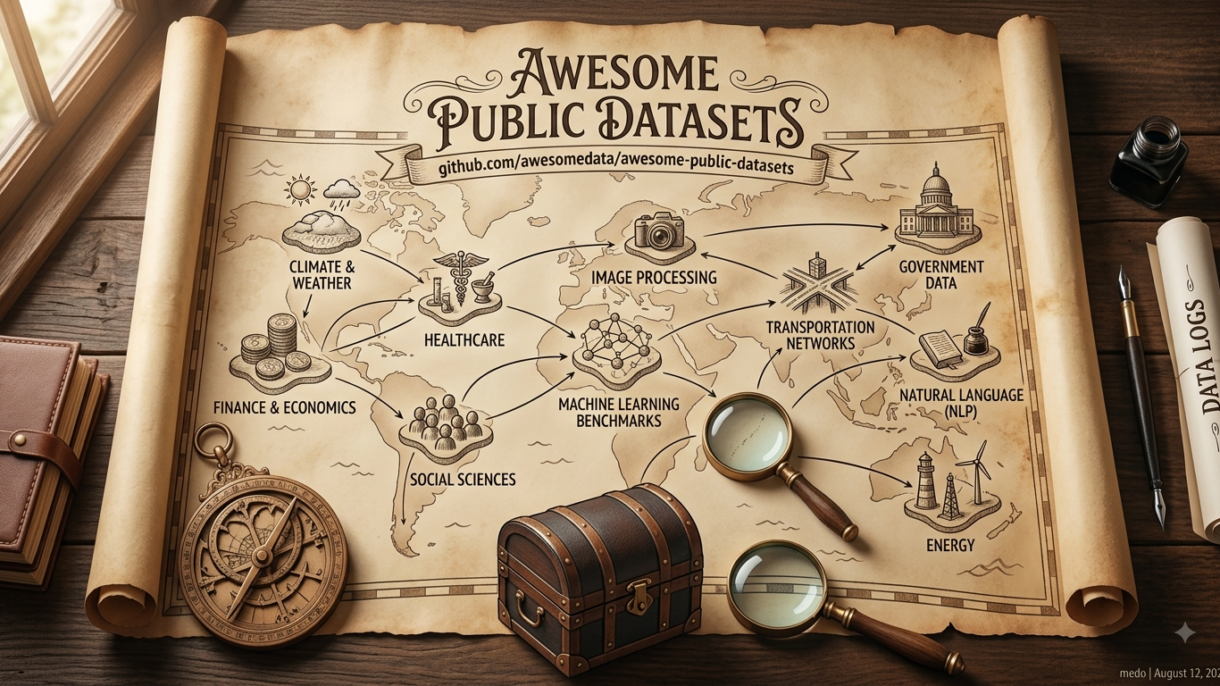
Awesome Public Datasets: A Treasure Map for Data-Driven Projects
A guide to Awesome Public Datasets, a curated GitHub repository that helps developers, researchers, students, and analysts discover high-quality public datasets across dozens of domains.

Artificial Intelligence and the Personal Computer: A Valid Comparison, but an Incomplete One
As artificial intelligence (AI) systems rapidly improve and spread across industries, a common argument emerges: the AI shift is comparable to the rise of the personal computer (PC) in the 1980s and 1990s. According to this view, AI represents another technological wave—initially disruptive, eventually normalized—requiring adaptation rather than concern. While this comparison is not without […]

AWS – Key Differences Between Network Access Control Lists (NACLs) and Security Groups
Navigating the complexities of cloud security requires a deep understanding of the tools at your disposal. Two fundamental components—Network Access Control Lists (NACLs) and Security Groups—serve as the cornerstone of network security in cloud environments. While both are instrumental in safeguarding your resources, they differ significantly in their operation and application. NACLs provide a layer of defense at the subnet level, controlling traffic based on a set of ordered rules. Security Groups, conversely, offer a more granular level of protection, applying to individual instances with a stateful approach to traffic filtering. This article elucidates the key differences between NACLs and Security Groups, shedding light on their unique roles and how they complement each other in fortifying your cloud infrastructure.
